
Fix Pectus Excavatum. No surgery.No bars. No scars.
The Vacuum Bell is the only clinically-studied, non-invasive treatment for funnel chest. 20+ years of peer-reviewed research. Medical-grade implant silicone. Results you can measure — from the first session.
Clinical success rate
Years of peer-reviewed research success rate
Pre-Nuss patients avoided surgery
Choose your Vacuum Bell
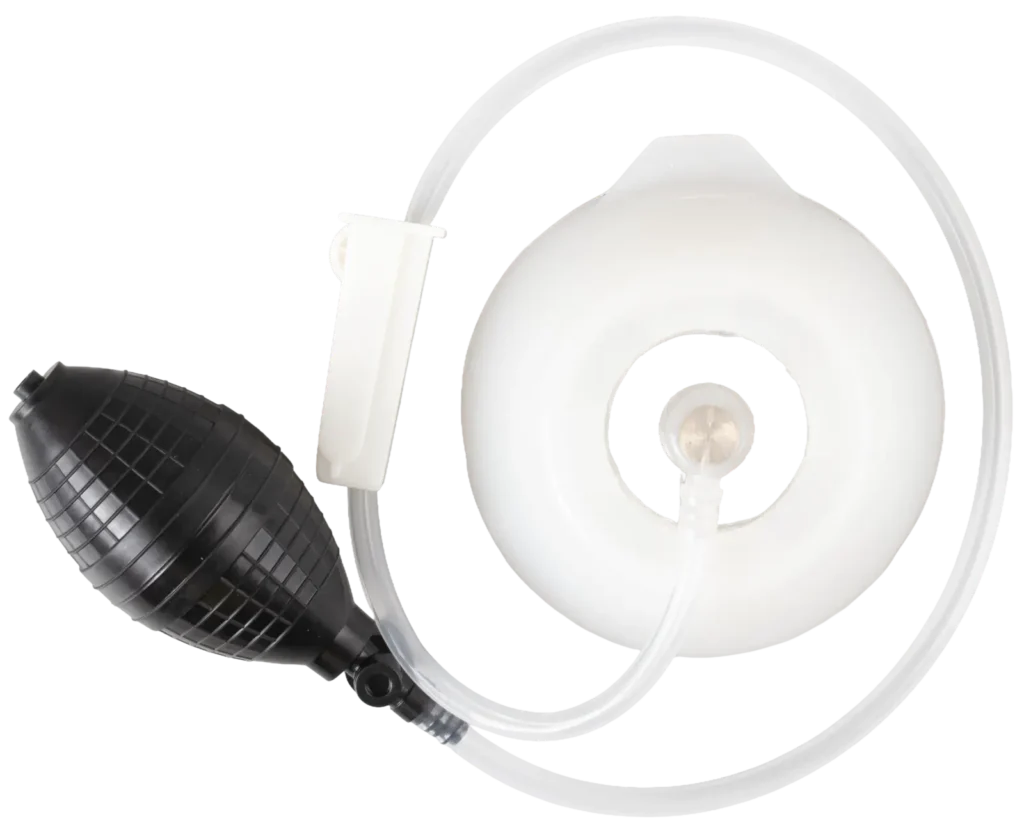
Every PectusX device is manufactured from implant-grade medical silicone — the same biocompatible material used in internal implants. Hypoallergenic, skin-safe, and built to complete the full 1,500-hour protocol.
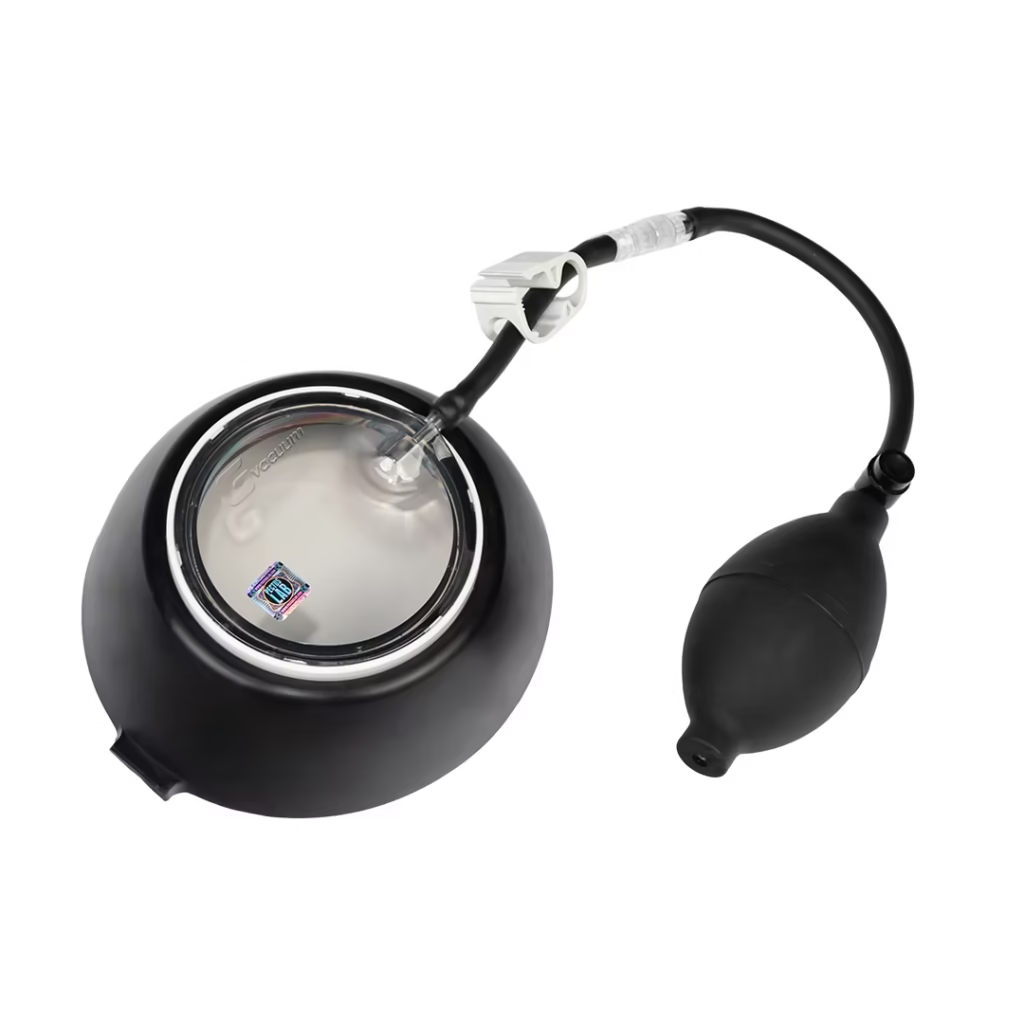
Pediatric XS
The VACUUM BELL 11 CM is the world’s only vacuum bell specifically designed for pediatric patients. It’s a gentle, safe, and proven way to...
€465,00
Getting the size right is the most important decision
Clinical research confirms that correct sizing is one of the most significant predictors of treatment success. The Bell must cover the entire depression plus at least 2 cm of healthy surrounding tissue to create an effective, airtight seal. An undersized device will fail to generate adequate suction. An oversized device will not conform to the chest wall.
 Interactive Size GuideBook Consultation
Not sure? Our specialist team reviews
your measurements and recommends the ideal model — free with every order.
Vacuum Bell therapy works at every age
Results vary with age and chest wall flexibility. Younger patients respond fastest — but meaningful correction is achievable well into adulthood.
Fastest results
Growing cartilage is highly flexible and responds quickly. Pediatric sizes (11–14 cm) available. Most children achieve significant correction within 12 months of consistent use.
The peak window
The adolescent growth phase is the optimal treatment window. Most patients achieve full or near-full correction within 18 months. Starting before the growth spurt ends is a strong predictor of success.
Meaningful improvement
Residual chest wall flexibility makes improvement well within reach. Results are more variable than in younger patients but are well-documented. Longer treatment duration and overnight use are key.
Still possible
A 2024 review in the Journal of Thoracic Disease confirmed that older patients with a stiffer chest wall can achieve correction with prolonged treatment. Combining VBT with targeted physiotherapy accelerates results.
Living with Pectus Excavatum is harder than it looks.
Maybe it’s your child’s pediatrician who first noticed the depression. Maybe it’s been years of avoiding pools, beaches, and changing rooms. Maybe you’ve spent weeks reading about the Nuss procedure — the general anesthesia, the metal bar, the two-year wait before removal.
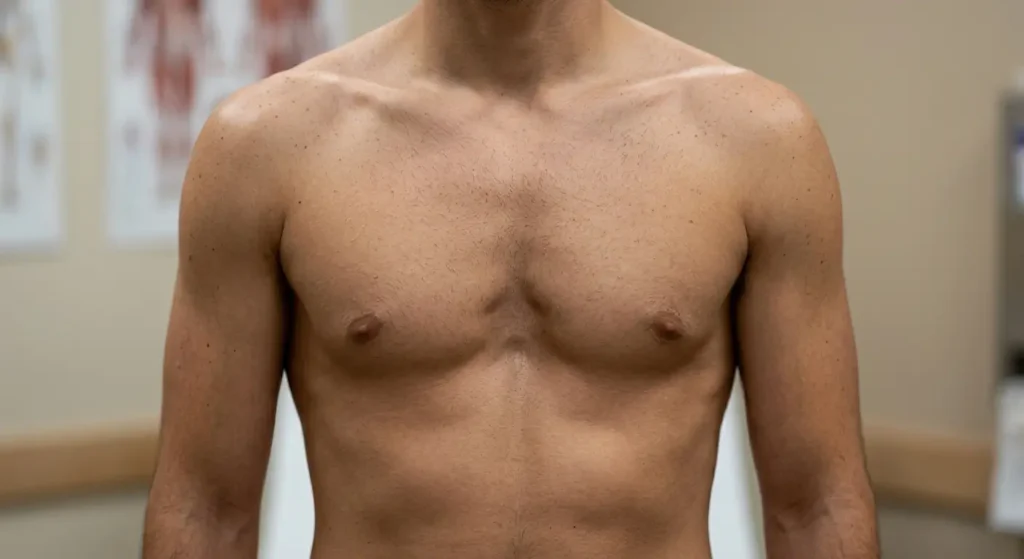
Pectus Excavatum is the most common congenital chest wall deformity, affecting 1 in every 300–400 live births. It is not just a cosmetic issue. In moderate and severe cases it compresses the heart and lungs, reduces exercise tolerance, and creates a psychological burden that many patients describe as more limiting than the physical symptoms.
The good news: you do not have to choose between surgery and doing nothing. There has been a third option for over twenty years — and it is backed by peer-reviewed clinical research.
“Maybe you’ve already researched the Nuss procedure — and you’re hoping there’s another way. There is.”
Pectus Excavatum — Key Facts
How Vacuum Bell Therapy corrects Pectus Excavatum
The Vacuum Bell lifts the sternum using controlled negative pressure. Used consistently, it gradually remodels the chest cartilage — no anesthesia, no hospital, no recovery time.
Seal
Starting pressure: gentle suction — mild pulling sensation only. Never force.
Repeat
Target: build to overnight use. Studies show overnight compliance doubles success rate.
Correct
1,500 hours cumulative = lasting correction. Begin seeing results in 4–8 weeks.
Two decades of science. One clear conclusion.
Vacuum Bell Therapy has been studied in peer-reviewed clinical trials since the early 2000s. Published in the Journal of Pediatric Surgery, Journal of Thoracic Disease and Scientific Reports (Nature Publishing Group).
Patients using overnight Vacuum Bell Therapy achieved complete or near-complete correction of their Pectus Excavatum.
Of patients originally scheduled for the Nuss procedure no longer required surgery after completing a course of Vacuum Bell Therapy.
Median reduction in Haller Index — the standard CT-based measure of Pectus Excavatum severity — following Vacuum Bell treatment.
Cumulative hours of Vacuum Bell application associated with lasting structural correction in clinical studies. At 4h/day: 12 months.
All cited studies are peer-reviewed and indexed in PubMed.
Individual results vary based on age, severity, chest wall flexibility and treatment compliance.
Results from real patients
“Reasonable delivery time. Product works as expected. Long-term result is still to be seen on our son. However, our doctor who suggested this product has reported good results with his other patients.”
“I felt really insecure about my pectus, but with the help the their vacum bell and gym training I’ve finally reached a point in which I feel great. I especially enjoyed their support choosing which VB would suit me best.”
“I’ve owned my bell for about a year now, give or take. To be honest, I haven’t been using it as often as I should be (every other day) and I often slack off on the exercises, but even despite this I’ve noticed a notable improvement in my condition. Give it a bit more time and some exercises, I’m confident that my pectus will be as it’s supposed to be in no time!”
Your questions, answered.
Everything you need to make an informed decision about Vacuum Bell Therapy. If your question isn’t here, our specialist team responds within 24 hours.
What is the best non-surgical treatment for Pectus Excavatum?
Vacuum Bell Therapy (VBT) is the only clinically-studied non-surgical treatment for Pectus Excavatum. Developed by engineer Eckart Klobe and first described in peer-reviewed literature in the early 2000s, it has been in continuous clinical use for over 20 years. Studies published in the Journal of Pediatric Surgery and the Journal of Thoracic Disease report success rates of up to 52.1%. It is most effective in younger patients and those with residual chest wall flexibility, but meaningful outcomes are documented at all ages.
How long does Vacuum Bell therapy take to show results?
Sternum elevation is visible and measurable from the very first session. Lasting structural correction — where the sternum maintains its elevated position without the device — requires approximately 1,500 cumulative hours of use. At 2–4 hours per day, this corresponds to 12–24 months. Younger patients typically progress faster due to greater cartilage flexibility. Patients who incorporate overnight use consistently achieve better outcomes in shorter timeframes.
Can adults use Vacuum Bell therapy?
Yes. Adults with residual chest wall flexibility can achieve meaningful improvement. A 2024 review published in the Journal of Thoracic Disease — covering 20 years of clinical application — confirmed that older patients with a stiffer chest wall can achieve correction with prolonged treatment duration. Combining Vacuum Bell Therapy with targeted physiotherapy exercises to improve chest wall mobility is particularly recommended for adults over 30.
Is Vacuum Bell therapy safe? What are the side effects?
Vacuum Bell Therapy is considered safe when used according to the prescribed protocol. The most common side effects are temporary skin redness, petechiae (small red dots beneath the skin at the device edges), and mild bruising — all of which resolve within a few hours of removing the device. Serious complications are extremely rare. The therapy is contraindicated in patients with coagulopathy, vasculopathy, musculoskeletal disorders, or certain cardiac conditions. Always consult a qualified thoracic surgeon before beginning treatment.
What size Vacuum Bell do I need?
The correct Vacuum Bell must fully cover the entire pectus depression plus at least 2 cm of healthy surrounding tissue on all sides. This margin is essential for creating an effective, airtight seal. Our devices range from 11 cm (pediatric) to 28 cm for larger adult frames. We provide a free interactive sizing guide and an expert consultation service — both strongly recommended, as incorrect sizing is one of the leading causes of poor treatment outcomes.
How is Vacuum Bell different from the Nuss procedure?
The Nuss procedure (MIRPE) is minimally invasive surgery requiring general anesthesia, 2–5 days of hospitalization, a curved metal bar placed behind the sternum for 2–3 years, and a second surgical procedure for bar removal. Vacuum Bell Therapy requires none of these. It is used at home, daily, with no anesthesia, no incisions, and no recovery period. Clinical data shows that 26.7% of patients awaiting Nuss surgery no longer required the procedure after completing a course of Vacuum Bell Therapy.
The non-surgical path to a corrected chest starts here.
You don’t need a surgeon’s waiting list, a general anaesthetic, or two years with a metal bar in your chest. You need the right device, the right size, and consistency. We’ll handle the rest.
Free worldwide shipping · 30-day guarantee · Expert support included