
The Complete Guide — Vacuum Bell Therapy
Vacuum Bell Therapy: Non-Surgical Correction of Pectus Excavatum
The only clinically-studied, non-invasive treatment for funnel chest — 20 years of peer-reviewed evidence, no incisions, no anaesthesia, no hospital stay. Daily home use over 12–24 months progressively reshapes the sternum and anterior chest wall.
Latest research
Haecker FM, 2024
20-year review confirms VBT as a safe, effective alternative to surgery in selected PE patients. Validated indications and contraindications identified.
✦ Implant-grade medical silicone
✦ 20+ years of clinical research
✦ Expert size consultation
✦ 30-day guarantee
52%
Overall success rate
15-year study · 259 patients
20+
Years of published clinical data
63%
Of pectus surgeons use VBT
as alternative to surgery
0
Surgical incisions or hospitalisation
Definition
What is Vacuum Bell Therapy?
Vacuum Bell Therapy (VBT) is a non-surgical, non-invasive treatment for Pectus Excavatum — the most common chest wall deformity, affecting approximately 1 in 300–400 births. The therapy uses a silicone suction cup (the “Vacuum Bell”) connected to a hand pump to create controlled negative pressure over the depressed sternum.
First introduced by engineer and PE patient Eckart Klobe in the early 2000s, VBT has been used clinically in paediatric surgical centres worldwide for over 20 years. The Chest Wall International Group (CWIG) — the leading international body for chest wall deformity management — has recognised VBT as an established non-operative treatment option, with approximately 63% of pectus surgeons surveyed using it as an alternative to surgery.
“Non-operative treatment of PE with VBT proved to be safe and a potential alternative to surgical repair in carefully selected PE patients.”
Unlike the Nuss procedure (MIRPE), which requires general anaesthesia, surgical incisions, and typically 3–4 days of hospitalisation, VBT is entirely self-administered at home. The device is placed over the sternum and used for 2 hours per session, twice daily. Over 12 to 24 months of consistent use, the sustained negative pressure gradually reshapes the chest wall through a process of mechanical cartilage remodelling.
A 2024 comprehensive review by Frank-Martin Haecker — the researcher who has studied VBT for two decades — confirmed VBT as an established complementary tool in PE management, with validated patient selection criteria and a growing body of long-term outcome data.
Mechanism
How Vacuum Bell Therapy Corrects the Chest Wall
Follow this evidence-based protocol for every session. Consistency is the single most important predictor of outcome.
01
Negative Pressure Lift
The hand pump evacuates air from the silicone bell, creating approximately 150 mbar of negative pressure — 15% below atmospheric. This immediately lifts the sternum, pulling it anteriorly. The lift is visible within seconds of application and measurable via CT scan from the first session.
02
Cartilage Remodelling
Daily sustained mechanical force triggers mechanical transduction in chondrocytes and osteoblasts — the cells responsible for cartilage and bone growth. Under consistent directional load, these cells progressively remodel the costochondral junctions, gradually shifting the sternum's resting position forward.
03
Permanent Retention
As months of treatment accumulate, the remodelled cartilage retains the elevated sternal position even between sessions. By the end of the active phase, the correction is largely permanent — recurrence rates in published studies are as low as 2.3% in patients who completed the full protocol.
Patient Selection
Who Benefits from Vacuum Bell Therapy?
VBT is effective for a wide spectrum of patients — from young children to adults — with important differences in outcome based on age and chest wall flexibility.
Negative Pressure Lift
The optimal patient group. Chest wall cartilage is at its most malleable, enabling the fastest and most complete remodelling. Studies consistently show superior outcomes in this age group. VBT is recommended as the first-line treatment before considering surgery.
Best outcomes
Adolescents & Teenagers
During growth spurts, the chest wall is actively remodelling — making this a highly responsive window for VBT. Treatment started before skeletal maturity achieves significantly better results. The pubertal growth phase is an important indicator of remaining chest wall flexibility.
Highly responsive
Adults (18–61)
Clinical studies include patients up to 61 years of age. Adult patients with residual chest wall flexibility — confirmed during a trial application — can achieve meaningful improvement. Results are less dramatic than in younger patients, but measurable correction is documented in the literature.
Flexibility determines outcome
Women & Girls
A dedicated Women’s Bell model is available with a modified design that accommodates breast anatomy. Studies indicate that watchful waiting or early treatment is preferred in female patients — early intervention before breast development leads to better outcomes and treatment adherence.
Dedicated device available
Pre-Surgical Patients
For patients who will eventually need the Nuss procedure, VBT is used as pre-treatment to increase chest wall flexibility, reduce surgical difficulty, and in some cases avoid surgery entirely. A 2024 study found 26.7% of surgical candidates no longer needed the Nuss procedure after VBT.
Bridge to surgery
Post-Surgical Patients
VBT is used in cases of recurrent Pectus Excavatum following the Nuss procedure, to manage residual deformity. It is also used intraoperatively during MIRPE to facilitate retrosternal space dissection and bar placement — making surgery safer with less invasive preparation.
Post-Nuss application
Explore the Full Therapy Guide
Everything You Need to Know About VBT
Each section below is a dedicated, evidence-based resource. Start with the protocol if you are new to VBT, or go directly to the topic most relevant to your situation.
Step-by-step
How Vacuum Bell Therapy Works
The complete biomechanical explanation, daily application protocol, pressure settings, and 6-step guide for every session. Includes before/after comparison and video tutorial.
Patient outcomes
Results & Before/After Gallery
Real patient results with documented before/after images. Understand what outcomes to expect at 3, 6, 12, and 24 months of treatment based on age and severity.
Daily schedule
Complete Daily Protocol
The evidence-based week-by-week session schedule. How to build from 30 minutes to 4 hours per day, pressure progression, logging, and what to monitor at each phase.
Treatment comparison
VBT vs Nuss Procedure
A detailed, evidence-based comparison between non-surgical VBT and minimally invasive Nuss surgery (MIRPE). Risks, recovery times, costs, outcomes, and when to choose each.
Safety & risks
Side Effects & Safety
What side effects to expect, which are normal (redness, bruising), which require attention (blistering), and the full contraindication checklist to review before starting.
Paediatric guide
VBT for Children
Age-specific guidance for parents. When to start, supervision requirements, sizing for younger patients, school and sport compatibility, and how to maintain consistency.
Adult patients
VBT for Adults
Managing expectations as an adult patient — how to assess chest wall flexibility, what results are realistic, and how to combine VBT with postural and breathing exercises for best outcomes.
Therapy FAQ
Vacuum Bell Therapy FAQ
Every question about VBT answered with clinical precision. From “does it hurt?” to “can I exercise with it?” — 30+ questions based on the most-searched VBT queries.
Treatment Options
VBT vs Nuss Procedure At a Glance
For many patients with mild-to-moderate Pectus Excavatum, VBT is a viable first-line alternative to surgery. Here is how the two approaches compare across the factors that matter most.
| Factor | Vacuum Bell Therapy | Nuss Procedure (MIRPE) |
|---|---|---|
| Invasiveness | ✓ Fully non-surgical | ✗ Minimally invasive surgery |
| Anaesthesia required | ✓ None | ✗ General anaesthesia |
| Hospitalisation | ✓ Zero — home use | ✗ 3–5 days |
| Recovery time | ✓ Immediate — no downtime | ✗ 4–6 weeks restricted activity |
| Best age | ✓ All ages (3–61) | ~ Adolescents & young adults |
| Success rate | ~ 52% (15-yr study) | ✓ Higher in severe cases |
| Suitable for severe PE | ~ Pre-treatment / bridge | ✓ Yes — primary indication |
| Pain level | ✓ Minimal (temporary redness) | ✗ Significant post-operative pain |
| Complication risk | ✓ Very low — all minor | ✗ Pneumothorax, bar displacement |
| Commitment required | ✗ 4 hrs/day × 12–24 months | ✓ Single procedure |
| Can avoid surgery | ✓ 26.7% no longer needed Nuss | — N/A |
Clinical Evidence
20 Years of Peer-Reviewed Research
VBT is among the best-studied non-surgical interventions for Pectus Excavatum, with data from institutions across Europe, North America, and Asia.
52%
Overall success rate
in completed treatment
J Pediatric Surgery · 15-yr study · 2024
26.7%
Pre-surgical patients who
no longer needed Nuss
J Pediatric Surgery · 2024
80%
Patients with measurable
chest wall improvement
Haecker FM · 13-yr Swiss cohort
2.3%
Recurrence rate in
patients completing protocol
J Pediatric Surgery · 2024
2006
Haecker & Mayr — EJCTS
First major clinical report. 34 patients aged 6–52. CT scans confirmed immediate sternal lift. 79% achieved elevation >1.5 cm at 3 months. VBT established as a valid alternative therapeutic option.
2019
Haecker FM — 13-Year Experience
133 patients aged 3–61. 43.6% achieved fully corrected sternum. Documented intraoperative VBT use during MIRPE. Device sizes and patient selection criteria formalised.
2024
Haecker FM — 20 Years of VBT
Comprehensive 20-year review published in the Journal of Thoracic Disease. CWIG survey data: 63% of pectus surgeons use VBT as surgical alternative. Validated indications, contraindications, and monitoring protocol formalised.
2024
Amsterdam UMC — 15-Year Study
259 patients. 52.1% success rate in those who completed treatment. Overnight use significantly improves outcomes. 26.7% of Nuss candidates no longer required surgery. Recurrence: 2.3%.
2024
BMC Pediatrics — Retrospective
98 patients, 3.3-year follow-up. 25% excellent correction via Haller Index. Age ≤11 and treatment >24 months predict best outcomes. Confirmed safety profile: all complications minor.
2025
Children's Hospital of the King's Daughters
431 patients — the largest VBT dataset published. Excellent correction in 11% with complete correction or >100% improvement. Factors: younger age at onset, mild deformity, flexible chest wall.
Medical Device Catalog
Choose the Right Vacuum Bell
Four models to match every body type and age group. Getting the correct size is the most important factor after therapy commitment — use our interactive Size Guide if unsure.
Children · Ages 4–12
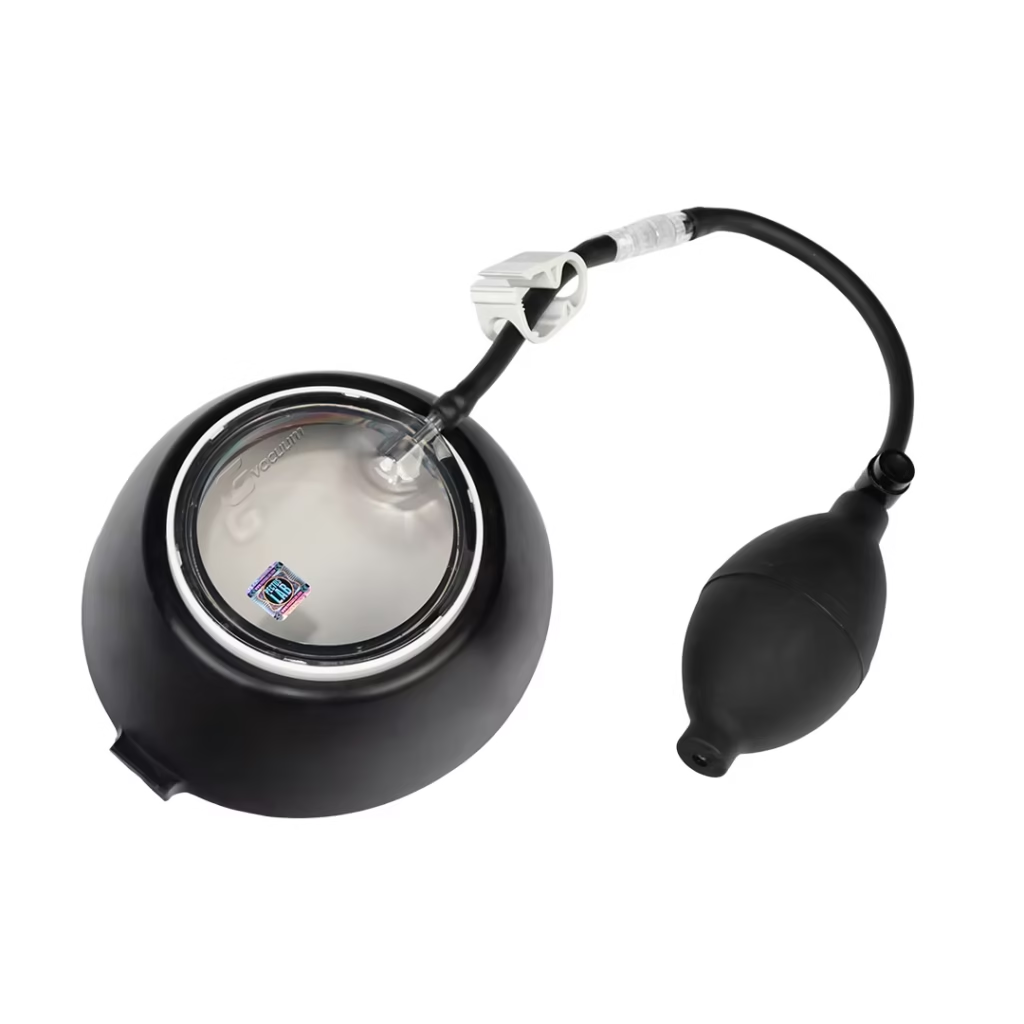
Pediatric XS
The VACUUM BELL 11 CM is the world’s only vacuum bell specifically designed for pediatric patients. It’s a gentle, safe, and proven way to...
€465,00
FAQ
Frequently Asked Questions
The most common questions about Vacuum Bell Therapy — answered with clinical accuracy.
What is Vacuum Bell Therapy and how does it work?
Vacuum Bell Therapy (VBT) is a non-surgical treatment for Pectus Excavatum that uses a silicone suction cup and hand pump to create negative pressure over the depressed sternum. This pressure immediately lifts the sternum anteriorly and, with daily consistent use over months, triggers progressive cartilage remodelling — permanently shifting the sternum toward its anatomically correct position. No incisions, anaesthesia, or hospital stays are required. The device is entirely self-administered at home.
What is the success rate of Vacuum Bell Therapy?
A 15-year retrospective study at Amsterdam University Medical Center (Journal of Pediatric Surgery, 2024) found a 52.1% success rate among 165 patients who completed treatment. A Swiss cohort by Haecker et al. found 80% of patients showed measurable chest wall improvement, with 43.6% achieving full sternal correction. Success rates are highest in: patients under 11 years, those with flexible chest walls, patients using the device for longer daily durations, and those who use it overnight.
How long does Vacuum Bell Therapy take?
Active treatment typically requires 12 to 24 months of daily use at the target dose of 2 hours per session, twice daily (4 hours total). Some patients with mild deformities and flexible chest walls see visible improvement within 3–4 months. A 5-year-old patient in published case data achieved full correction in 9 months; adult patients with rigid chest walls may require the full 24-month protocol. The adaptation phase (building from 30 min to 4 hours/day) takes approximately 5–7 weeks.
Can adults use the Vacuum Bell, or is it only for children?
Vacuum Bell Therapy is effective for patients of all ages. Clinical studies have documented successful treatment in patients aged 3 to 61 years. However, younger patients — particularly those under 11 years — typically achieve the most significant outcomes because their chest wall cartilage remains highly malleable. Adults can still benefit measurably, especially if they have residual chest wall flexibility confirmed by a trial application during a physician consultation.
Can Vacuum Bell Therapy replace surgery?
For selected patients with mild-to-moderate PE and a flexible chest wall, yes. A 2024 study found that 26.7% of patients who were on a waiting list for the Nuss procedure no longer required surgery after completing VBT. Approximately 63% of pectus surgeons surveyed by CWIG use VBT as an alternative to surgery for appropriate candidates. For severe PE (Haller Index >3.5), VBT is typically used as pre-treatment to improve flexibility before surgery, not as a replacement. Read the full VBT vs Nuss comparison.
Is Vacuum Bell Therapy painful?
VBT is generally well-tolerated. Temporary skin redness after every session is expected and normal — it resolves within 30 minutes. Mild bruising during the first 2 weeks of treatment is also common. Significant or sharp pain is not expected and should prompt a pressure reduction. A large 2024 study of 259 patients found complications in 22.8% of cases, but all were minor and temporary. No serious complications have been reported in the peer-reviewed literature.
What are the contraindications to Vacuum Bell Therapy?
VBT is contraindicated in patients with: skeletal disorders (osteogenesis imperfecta, osteoporosis, Glisson’s disease); vascular diseases (Marfan syndrome, aortic aneurysm, dilated aortic root); coagulopathies (haemophilia, thrombocytopenia); and significant cardiac malformations. Children under 3 years of age should not use the device. A physician evaluation — including cardiac screening and clinical examination — is required before starting therapy. The CWIG 2024 survey identifies coagulopathies and major cardiac malformations as the most common contraindications in clinical practice.
Can adults use the Vacuum Bell?
Yes. Published clinical studies document successful VBT use in patients aged 3 to 61 years. Adult patients with residual chest wall flexibility — confirmed by a trial application under medical supervision — can achieve meaningful sternal elevation. Results in adults are typically less complete than in younger patients due to reduced cartilage malleability, but measurable improvement is documented in the literature. A physician consultation before starting is strongly recommended for adult patients. Read our adult VBT guide.
Which Vacuum Bell size do I need?
PectusVac devices are available in four models: Junior (16 cm, children 3–12), Standard (19 cm, most patients), Pro (22 cm, broad chest), and Women’s (19 cm, modified for female anatomy). The correct size must completely cover the deepest point of your sternal depression. Use our interactive Size Guide which includes a printable template to measure at home. If between sizes, choose the larger — undersized bells deliver uneven pressure distribution and reduced efficacy. For clinical cases, your physician will assess fit during the first supervised application.